february
2013
march
2013
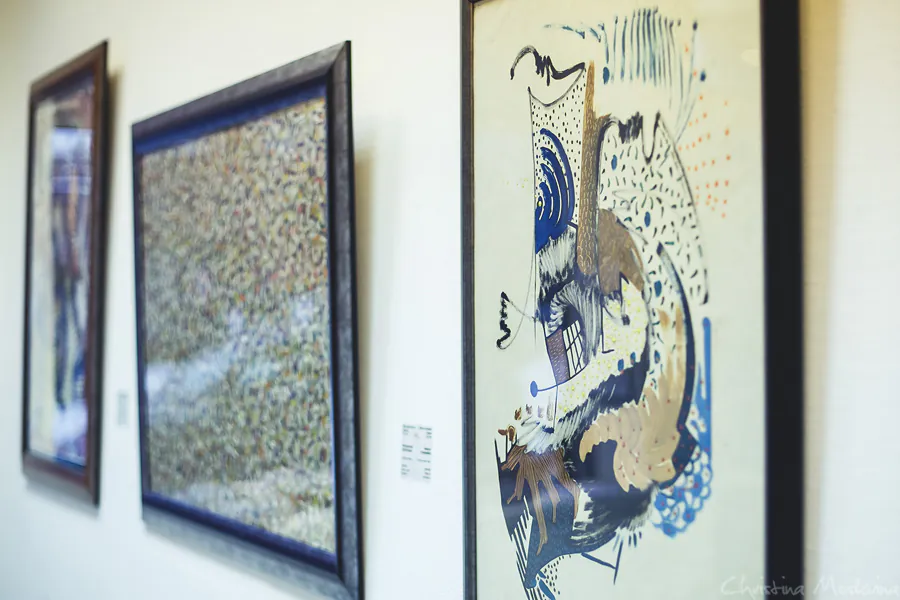
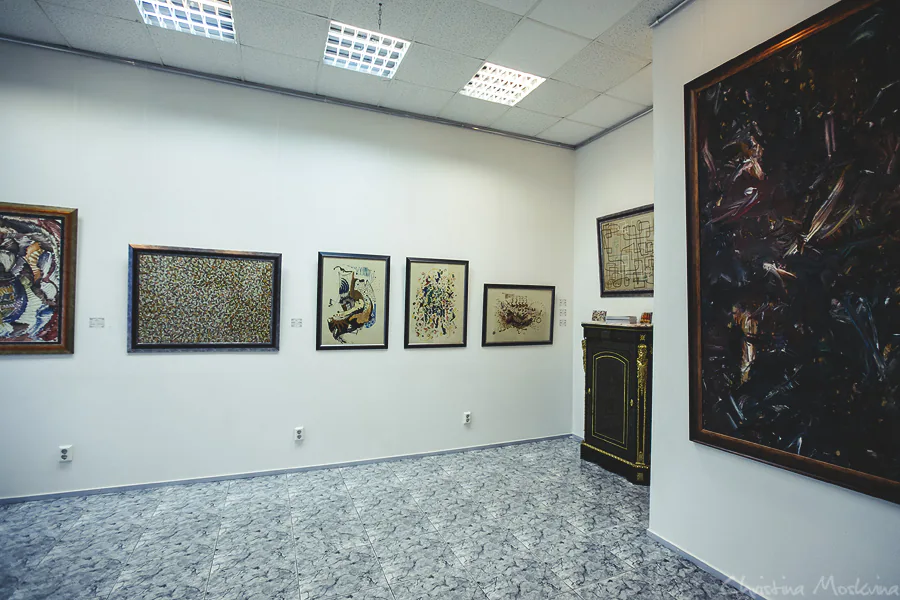
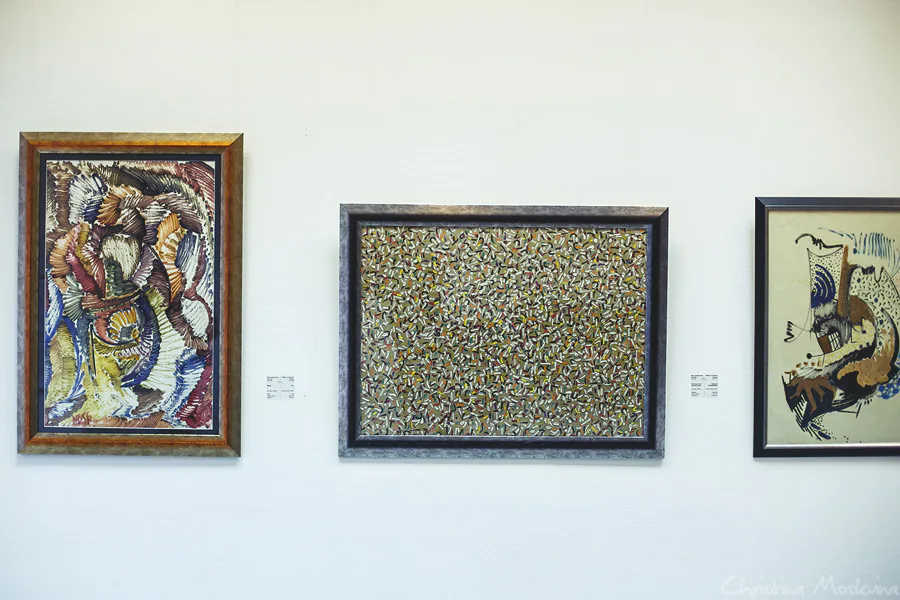

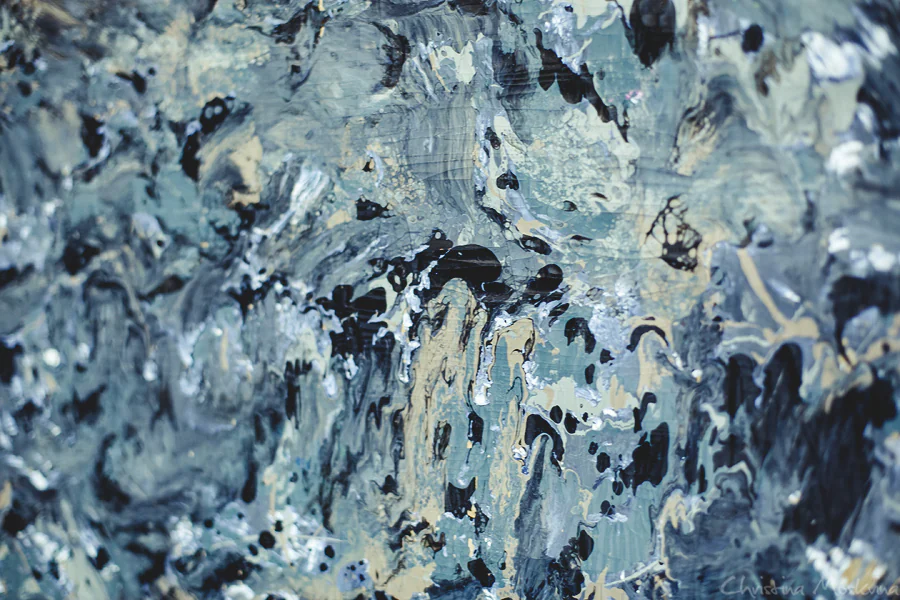
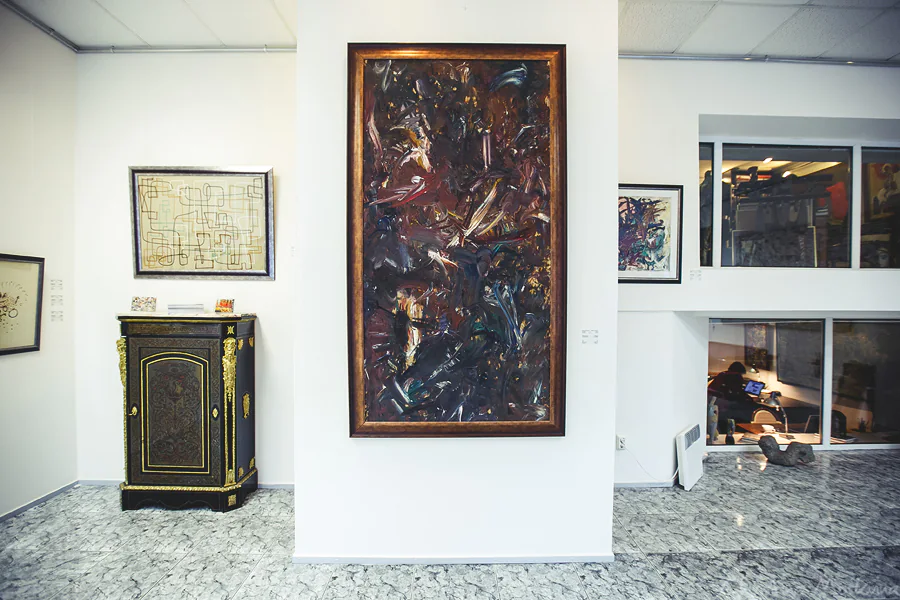
Among Russian nonconformist artists who have gained worldwide fame (O. Tselkova, O. Rabin, D. Krasnopevtsev, V. Weisberg), Evgeny Mikhnov-Voitenko occupies a special place. In terms of the scale of creativity and the power of expression of spiritual power, he has no equal among the unofficial masters of that time. Mikhnov's achievements can only be compared with the art of outstanding European abstractionists, such as J. Pollock, I. Klein, P. Mondrian. This is once again confirmed by the fact that two famous Russian art critics M. Alpatov and D. Sarabyanov, who spoke very reservedly about Russian nonconformism, gave only Mikhnov’s work a high rating: “...Alpatov looked, but rather crawled with his fingers, almost with his nose, over Mikhnov’s paintings (“warm... colder... warm again”) and exclaimed: “What is this? In all the museums.” I’ve been around the world and I’ve never seen anything like it!”
In the 1960-80s. Evgeny Mikhnov-Voitenko is an absolutely independent figure, a worthy master and technical virtuoso, who has found many ways to speak the language of abstract art and achieved undoubted success in each of them. But unlike other avant-garde artists, the artist does not exploit any of the techniques discovered by him. Having achieved virtuosity in mastering technical means in a couple of years, he leaves the previously used abstract language for the sake of inventing a new one.
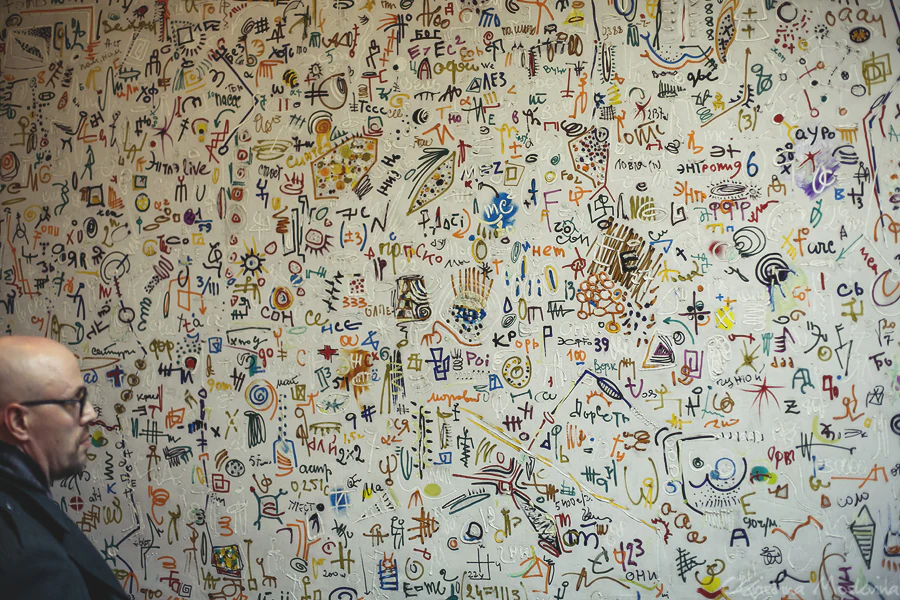
So, in 1956-59. Mikhnov gives birth to painting that had no analogues before. The artist calls it a “tube,” focusing on pure paint as a source of creativity. According to E. Andreeva, similar graffiti paintings will appear in Europe later, in the art of the new wave of the 1980s. Mikhnov covers white primed canvases with geometric shapes, such as zigzags, dots, arrows, and commas. He also uses ideographic writing: figures of people and animals stylized in an archaic manner, images of the simplest organisms, as if enlarged by a microscope, abstract diagrams of labyrinths and rockets. Such geometric shapes cover the ground with a bright network of green, red, yellow “camouflage” spots. They are all laid out neatly, despite the apparent chaos.
In total, from 1956 to 1959, the artist created eight large paintings from the “Tube” series. Fortunately, all of them were captured in old, lifetime photographs of the artist. Three of them are kept in the State Russian Museum, one is in the collection of the New Museum (St. Petersburg), three more are in foreign collections.
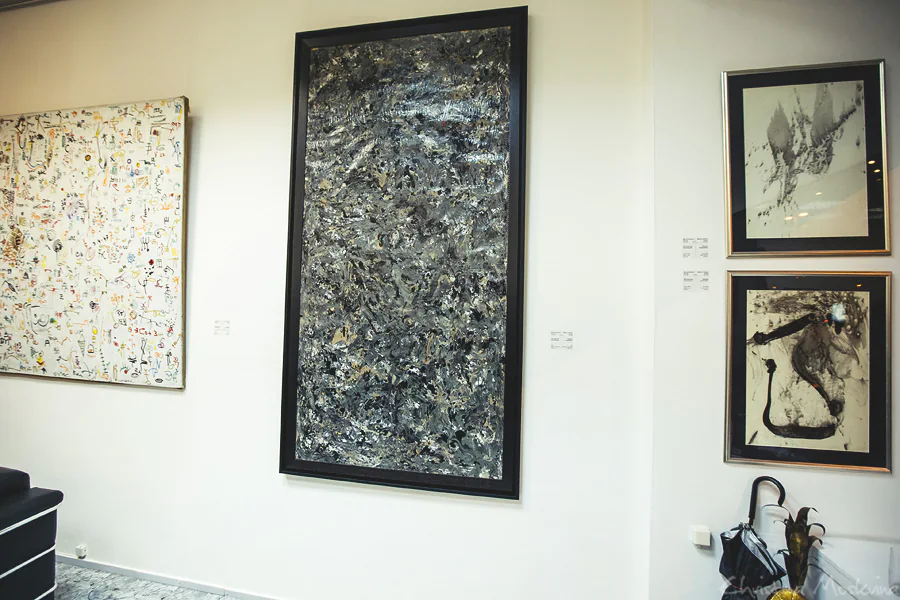
The exhibition at the DiDi Gallery of Collectible Art presents the eighth work from this series. As studies have shown, this is the second most recent creation of eight “tubes”, exceptional in its large dimensions – 158x282 cm. This item is distinguished by its emotional and informational richness, which makes it the most “talkative” work of this cycle. Mikhnov did not paint a picture, but created a world, which for the 25-year-old artist consisted of the concepts of “karma”, “god”, “entropy”, “seh”, “sleep”, “silence”, “May”... The master was happy at that time, which was reflected in his work: “Mikhnov’s paintings capture the author’s joy before a miracle, before his own creations, which until now did not exist in the world. Amazement at one’s own internal resources, which seem inexhaustible.”
The author himself defined “tubes” as a “somnambulistic method”, “neocalligraphy” and emphasized their ontological content. About the largest painting he said: “This is a different perception - not applied, not decorative, this is an environment - without a center, without figures, everything goes away and remains - all at once”; “I wanted it to have a breathable environment.” Of course, it was not the everyday environment that interested the artist, but the cosmic environment.
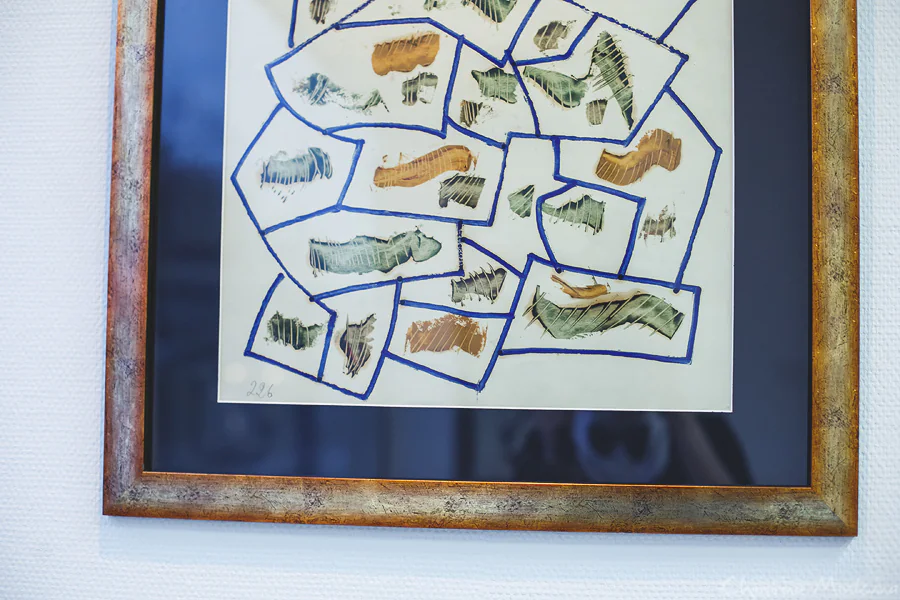
In addition to eight large works, Mikhnov created a significant number of smaller graphic works using this technique, but all of them surprise with the variety of techniques within the “tube” method. The artist squeezes out the paint, drawing out peculiar traces, or forms a sheet of paper with small colored drops, smears the lines with his fingers, giving them the shape of a fancy fan...
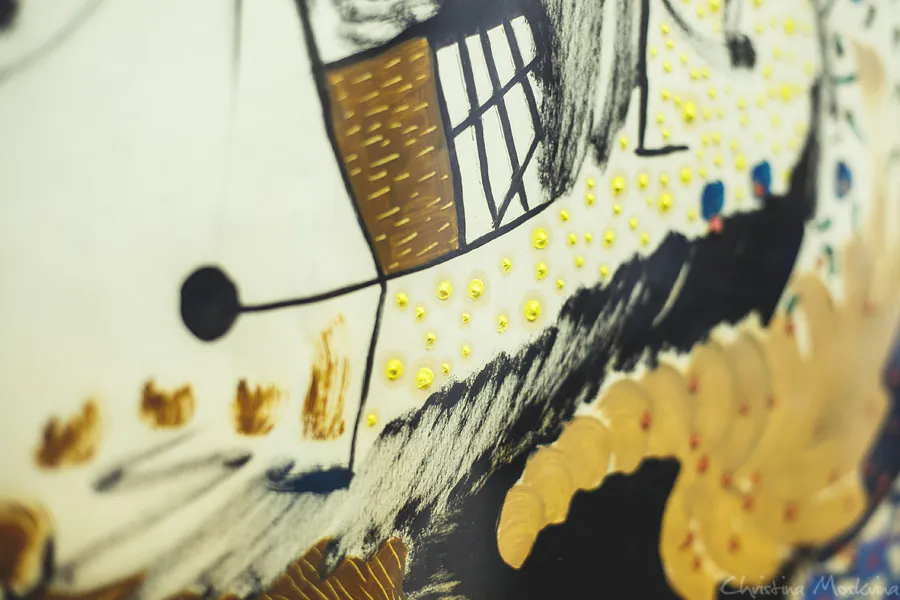
In 1959 or at the very beginning of the 1960s. Mikhnov will become interested in another technique: he will discover a new nitro-enamel paint and begin experimenting with the use of fire. The master will enter the next important period, while the “Tube” cycle will remain in his work as an island and a separate sovereign territory.
Text: Yulia Balybina, art critic
© St. Petersburg, 2005, all rights reserved