march
2020
june
2020
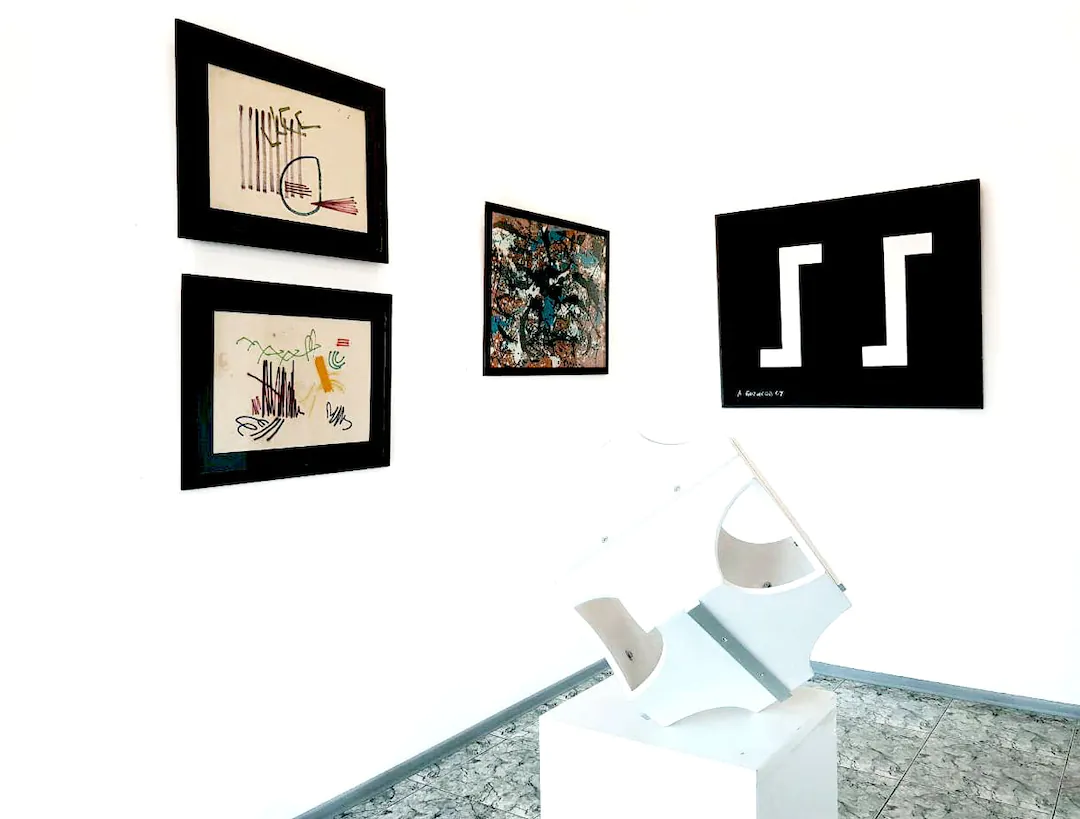
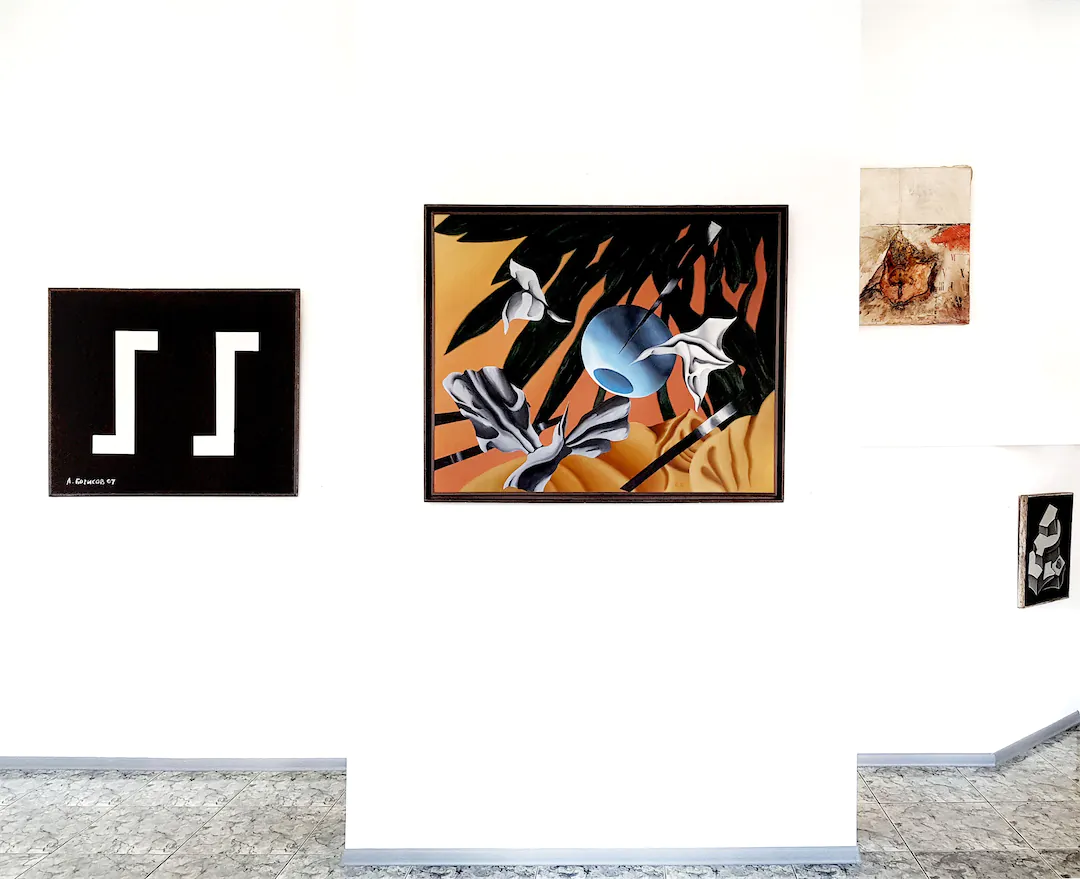
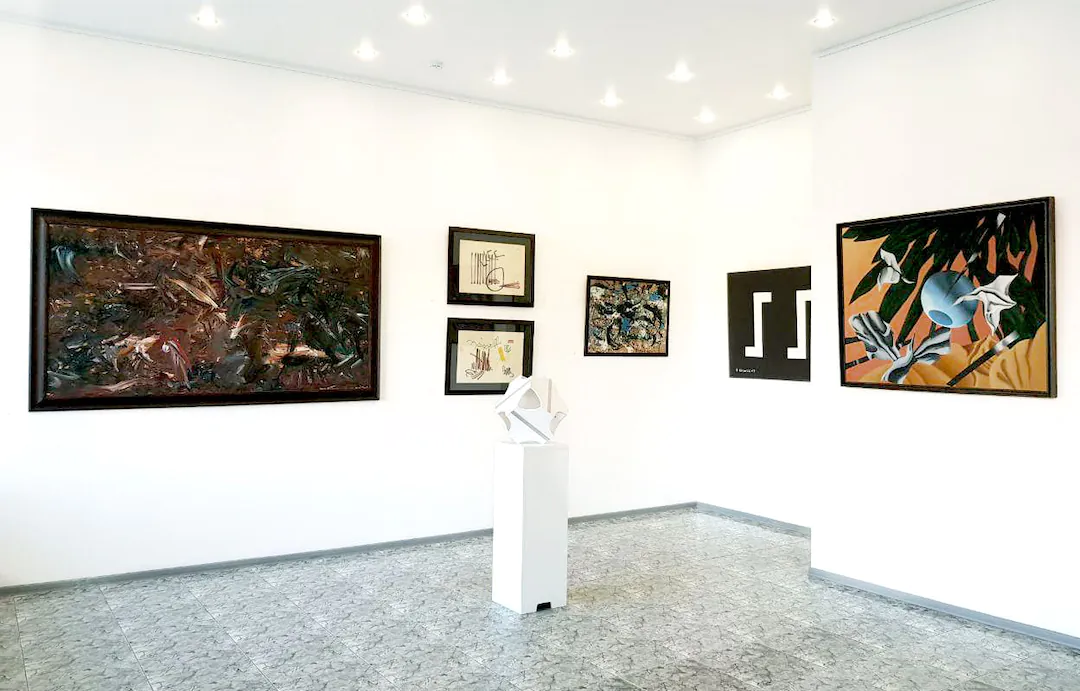
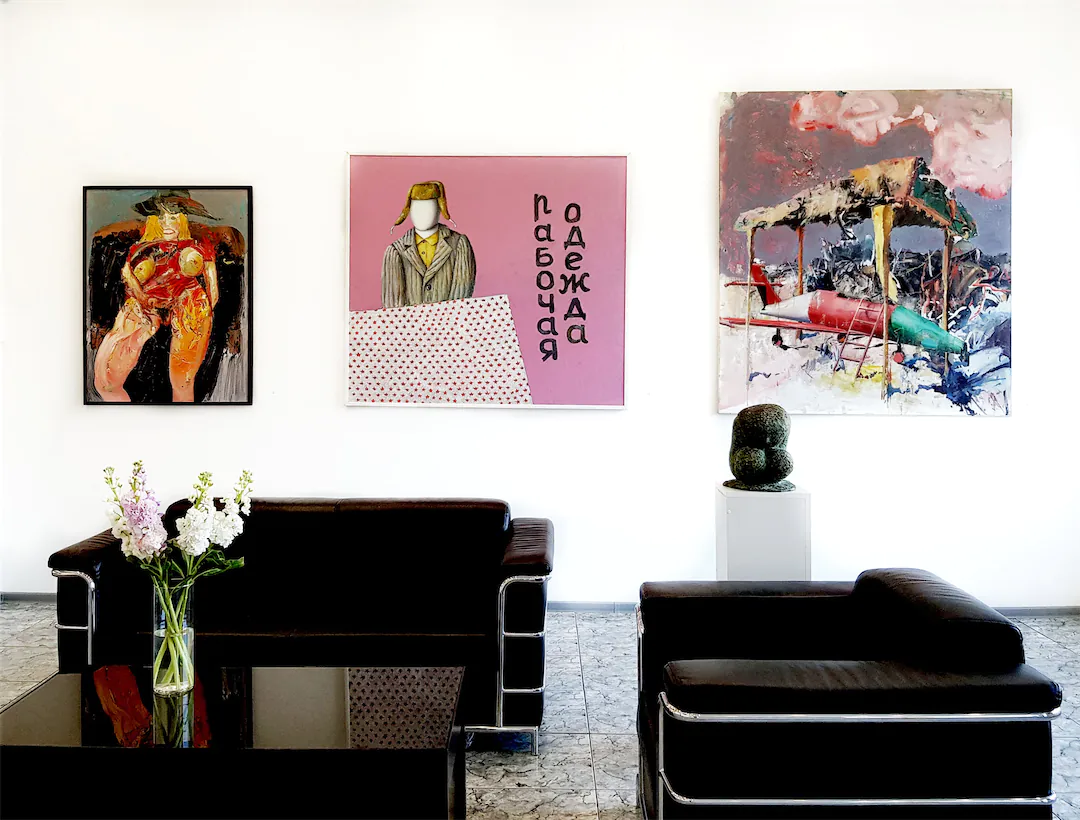
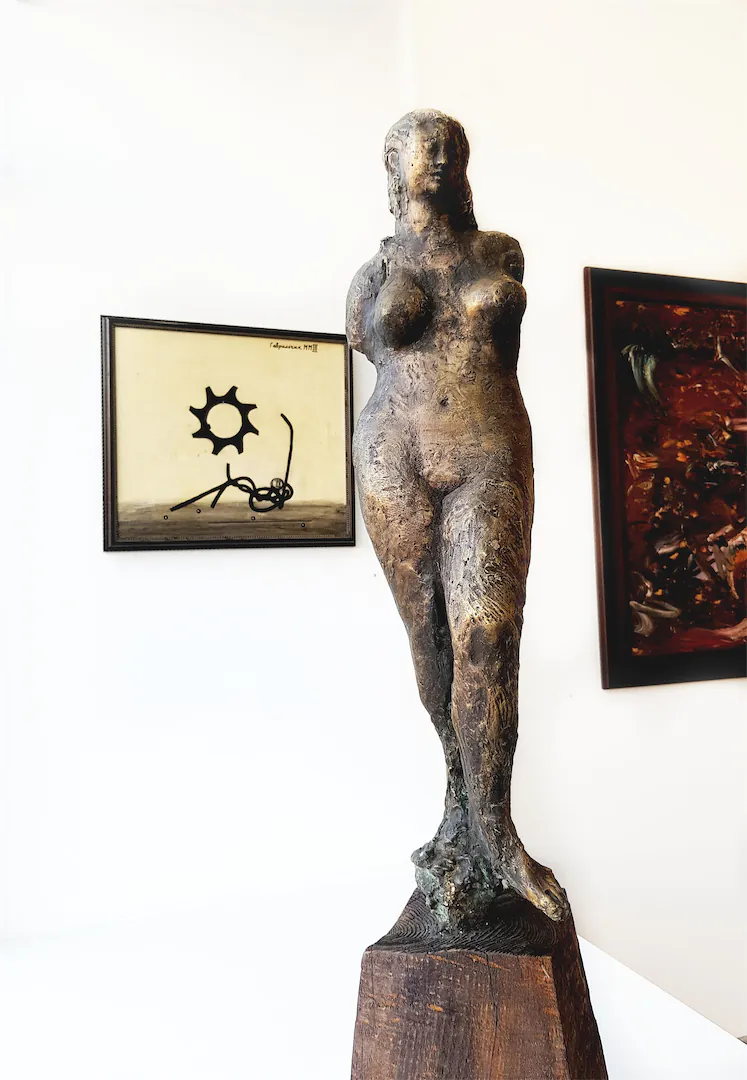
The spring exhibition in DiDi Gallery comprehended a number of unofficial artists of the second wave of the Russian avant-garde — the period between the 1950s and 1980s. The exposition is eclectic and includes the works of Moscow and Leningrad nonconformists, abstractionists and primitivists. They created their own, independent aesthetics, their creative search was free, despite the state ideology and government. Many of them were united by spiritualism, which then had a very strong revolutionary potential.
Evgeny Mikhnov-Voitenko is the leader of the older generation of the Leningrad underground, a unique artist for the history of Russian art. The large-format “Abstract Composition” was created in 1960, during the most important period of creativity, when the artist experimented a lot with materials and techniques. Two graphic works from the ‘‘Tube’’ series supplement the exposition and represent the author’s “golden fund”, some of which are stored in the Russian Museum.
‘‘The Ballad of the Ball’’ by one of the brightest representatives of the first generation of the Leningrad underground Vladlen Gavrilchik, is associated with the naive and primitive that the artist resorts to consciously. The author conducts a dialogue with Soviet culture, in which, through simplicity, ironically defeats a person’s desire for elegant and beautiful.
Mikhail Kulakov is a representative of the older generation of the underground, who emigrated to Italy in the 1970s. The author’s works are filled with the spirit of freedom and creative impulse, improvisation and intuition from the “thaw” that began in the USSR. The composition “Blossom”, written in 1960, belongs to Moscow period of the artist, combining the influence of abstract expressionism and tashism.
Leonid Borisovis a representative of the Leningrad underground, who worked at the junction of ‘‘geometric abstraction’’, minimalism and conceptualism. The monochrome work ‘‘SS’’ demonstrates the classical style of Borisov, which was gradually developed by the artist in an effort to free himself from all kinds of strata: symbolism, literature, and even picturesqueness.
The main work of the exhibition belongs to the brush of Sergei Kovalsky is a famous non-conformist artist, poet, one of the founders of the ‘‘Pushkinskaya-10’’ art center. The author devoted a series of works to studying the methods of synthesis of different types of art, in particular the transfer of music through the color scheme of painting. “Composition in the color of music Bird’s nest” refers the viewer to the work of the same name by jazz artist Charlie Parker.
Another participant in Leningrad underground, Evgeny Rukhin, is represented by ‘‘Composition’’ on this exhibition, written in 1976. The format and style of the artist fluctuates between abstraction and surrealism. The images and materials of the author eventually become invoices of civilization waste, items thrown into the landfill, which have lost their usefulness.
The topic about aesthetics of unnecessary things continues Dmitry Krasnopevtsev is a representative of Moscow unofficial art. In his ‘‘metaphysical still lifes’’ he turns to the traditions of surrealism and symbolism, combining the real and the unreal. “Composition” in many ways appears as an image of an inanimate object endowed with feelings.
Surrealism merges with expressionism on the canvas ‘‘Frantic in a Hat’’ by Yuri Jarki, a follower of the analytical method of P. Filonov.
One of the leaders of the generation of seventies artists Arkady Petrov is represented by the painting “Working clothes”. The artist’s picturesque style is usually associated with such areas in art as primitivism and social art. Possessing a higher art education, the author, throughout the entire career, seeks to get rid of the academic framework and find the naive sincerity of the letter, which we can see from the masters “from the people”.
In the 1970s, another Moscow artist Alexander Sitnikov began his career. Mythological images intertwined with symbols and mysteries form mathematically accurate compositions filled with meaning. “Concert” refers us to the symphony of A. G. Schnittke, which inspired the artist to create. Bright geometrical forms local in color contrast with figurative images, setting the whole composition dynamics and visualizing the sounds of music.
His wife, Olga Bulgakova, is a well-known Moscow artist, whose plastic language has transformed over the course of her career, filling up with more and more abstract forms that we can see in ‘‘Landscape II’’.
These two authors had a great influence on the formation of the artistic style of their daughter, the contemporary artist Natalia Sitnikova. The miniature composition “Bird I” balances on the border of the sensual and rational.
The female line continues in the exposition by the work of the St. Petersburg artist Elena Figurina “The Boat”. Despite the bright local palette, primitive images and soft rounded shapes create a sense of calm and warmth.
“Stylistic cocktail” appears in the work of the modern Belarusian artist Igor Tishin “Alternate airdrome”. The author combines “severe style”, compositional allusions of futurism and constructivism, while at the same time often imitating profane or outsider art.
The sculpture of Levon Lazarev “Model” supplements the exposition. His art permeates the philosophy of conscience, spiritual struggle, the eternal opposition to evil. That is why the work of Lazarev by the nature of his influence on the viewer is passionate, frankly inviting. The emotional power contained in the works of the sculptor is so active that it makes one involuntarily imbued with the feelings experienced by him.
© St. Petersburg, 2005, all rights reserved